

Burundian Journalists Spotlight Children and Adolescents Mental Health
Despite children and adolescents mental health being largely overlooked, along with a scarcity of specialists, a group of Burundian journalists is telling human-centered stories that amplify the voices of young people with lived experience to challenge stigma and bring long-neglected mental health issues into public conversation.
By Avit Ndayiziga, Jean de Dieu Ndikumasabo and Nolis Nduwimana
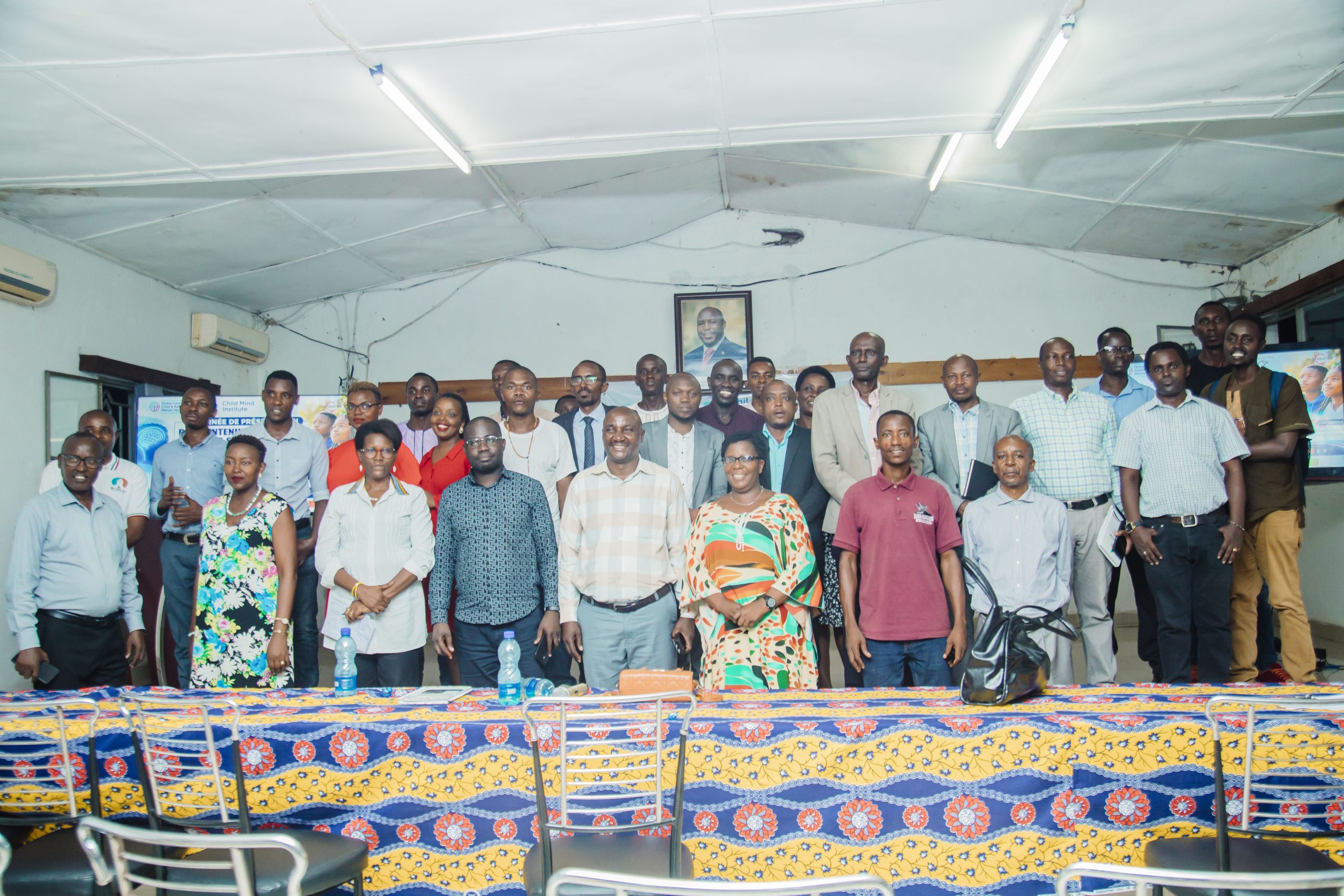
On October 14, 2026, Community Voice, in collaboration with Umuzi News, hosted a public presentation of media content focused on the mental health of children and adolescents at the Maison de la Presse du Burundi in Bujumbura, Burundi.
The event featured a diverse range of journalists’ stories across radio, print, digital media, and television, highlighting the media’s role in bringing children and adolescents’ mental health into public discourse.
The event brought together media professionals, representatives of public institutions, non-governmental organizations promoting mental health, parents, and other relevant stakeholders to learn from journalists’ stories and contribute to promoting children and adolescent mental health in Burundi.
As part of the Enhancing Mental Health Narratives in Burundi project, ten journalists representing radio, television, print, and digital media outlets across Burundi had received training in responsible and ethical mental health reporting guidelines.
During the presentation event, Nolis Nduwimana, Production Director, revisited the different training modules, highlighting their content and impact on the journalists who participated.

He explained that the training was designed to equip media professionals with a deeper understanding of mental health conditions affecting children and adolescents. It also aimed to strengthen their ability to identify relevant story ideas, adopt human-centered storytelling approaches, use data journalism techniques and develop effective story pitches.
Nduwimana reminded that the first module, facilitated by psychiatrist Dr Godelive Nimubona, focused on understanding mental health conditions among children and adolescents. Participants explored vulnerability factors, the consequences of these conditions, and available care and treatment approaches.
Mr Nduwimana also talked about the second module on editorial planning and reporting, which he facilitated himself, focusing on identifying relevant story ideas, developing compelling journalistic angles, preparing effective interviews and highlighting initiatives and solutions in the field of mental health.
Reflecting on the importance of ethical and engaging reporting, Nduwimana also highlighted the third module on Human-Centred Storytelling, facilitated by Jean de Dieu Ndikumasabo. He noted that the module encouraged journalists to place people’s lived experiences at the heart of their narratives, while connecting individual stories to broader societal realities.
Nduwimana also highlighted the fourth module on data journalism and the ethical handling of information, led by Avit Ndayiziga. He explained that participants were introduced to methods of collecting, analyzing, and triangulating statistical data with personal testimonies to produce accurate, credible and well-documented stories with visualizations or illustrations.
He added that Gaspard Maheburwa facilitated a session on pitching journalistic mental health story ideas, equipping participants with the skills to structure, present, and defend relevant and feasible reporting proposals.
Reflecting on the training’s outcomes, Nduwimana reported that, over a year, guided by their editors, trainees produced human-centered, solution-oriented stories that amplify the voices of children and adolescents with lived experience.
The outcomes include seven radio stories in Kirundi, seven written articles in French, one television report in Kirundi with French subtitles, and one print-media story.
He added that their stories covered various mental health conditions, including brief psychotic disorder, neurodevelopmental disorders (NDDs), intellectual disability and autism spectrum disorder (ASD), post-traumatic stress disorder (PTSD), substance use disorder (SUD), schizophrenia, and behavioral disorders.
Avit Ndayiziga, coordinator of the Enhancing Mental Health narratives project in Burundi focused on children and Adolescents, explained that the initiative grew out of his experience as a Rosalynn Carter Fellow for Mental Health Journalism in the United States in 2024.

During the fellowship, he explored the intersection of climate change and mental health, with a particular focus on children and adolescents as well as women.
This experience paved the way for his collaboration with the Stavros Niarchos Foundation (SNF) Global Center for Child and Adolescent Mental Health at the Child Mind Institute, where he was named the inaugural communicator fellow, a collaboration that birthed a project to train Burundian journalists and provided editorial support for reporting on mental health conditions affecting children and adolescents.
Mr. Ndayiziga also underscored the need to give greater attention to the mental health of children and adolescents, a field he considers to be largely overlooked in Burundi. He particularly highlighted the shortage of child and adolescent psychiatrists in the country.
He explained that the journalistic productions are intended to raise public awareness, encourage people experiencing mental health challenges to seek professional care, and challenge beliefs that attribute mental health conditions to witchcraft and false beliefs.
Speaking from New York, U.S.A., on behalf of Child Mind Institute, the project funding partner, Peter Rauci, Director of Global Fellowship Strategy at the Stavros Niarchos Global Center at the Child Mind Institute, encouraged journalists by reminding them that their work can inform, influence, and transform perceptions. “Through the stories you tell, you encourage young people to seek help, help families better understand these issues, and contribute to building stronger communities in Burundi and far beyond its borders, and help make mental health more visible, better understood, and less stigmatized,” he indicated.

In addition to Peter, Karen Ladley, Senior Associate Director of The Rosalynn Carter Fellowships for Mental Health Journalism and Media at The Carter Center, emphasized, in her remarks, the influential role journalists play in shaping public perceptions of mental health and reducing stigma.
She explained that former U.S. First Lady Rosalynn Carter established the fellowship in 1996 because she understood journalism’s power to shape public discourse and challenge mental health stigma.
“Journalists set the tone through the language and images they use, influencing how people understand and perceive mental health. That is an enormous responsibility, but also a powerful opportunity for the media,” she said.
She noted that, 30 years ago, The Carter Center recognized the importance of working with journalists to transform how people talk about and understand mental health. Since then, the program has worked with more than 450 journalists, with an impact extending far beyond those directly trained.
“Through the journalists trained by The Carter Center, we have seen an impact that reaches well beyond these 450 individuals. The scale of this work is reflected in its geographical reach: we have been involved in 40 U.S. states, two territories, and 11 countries around the world,” she said.
Ladley added that the initiative has contributed to the production of thousands of mental health stories, demonstrating journalism’s far-reaching influence in shaping public understanding of mental health.
On behalf of the online news outlet, Umuzi News, a strategic collaborator in implementing the project, Acting Director Jean de Dieu Ndikumasabo reaffirmed the outlet’s commitment to rigorous, human-centered, and evidence-based mental health stories.

For him, when journalists present their stories to the public, they share not only their stories but also the skills they have acquired in responsible and ethical mental health reporting. This approach combines investigative and data journalism, enabling them to tell stories that strengthen the community.
He reminded the public that the presentation followed intensive training on September 26 and 27, 2025, in Gitega, on responsible and ethical mental health coverage, with a particular focus on children and adolescents, followed by fieldwork, investigation, editing, and publication.
The stories followed a human-centered approach, prioritizing personal experiences to better understand mental health challenges without stigmatization or sensationalism, and to shed light on the realities.
Finally, he thanked the trainers, journalists, health professionals, Press House of Burundi, and, more importantly, the funding partner, the Stavros Niarchos Foundation (SNF) Global Center for Child and Adolescent Mental Health at the Child Mind Institute.
On behalf of media leaders, Burundi National Radio director Prosper Ngabirano thanked the organizers of the session and all partners who contributed to training Burundian journalists on mental health.

. “We, as media leaders, are delighted to see that our journalists are taking a greater interest in this topic, which, it must be acknowledged, is still undercovered in our newsrooms,” he noted.
He encouraged the training participants to put their newly acquired knowledge into practice and continue producing professional, relevant content that is accessible to all. He also called on the organizers and their partners to expand these training programs to other topics still underrepresented in the media, to ensure there are enough specialized journalists.
“May this training mark the beginning of a lasting collaboration, and may such initiatives continue to strengthen our journalists’ capabilities on essential topics that are still underdeveloped in our media,” he said.

The participating media outlets included the National Radio of Burundi, Radio Télévision Isanganiro, Radio Indundi Culture, Radio Bonesha FM, UMUCO FM, STAR FM and SHIMA FM, as well as the newspapers Le Renouveau and Iris News, and Mashariki Television.
Please read some stories here:
1.Trouble du développement chez l’enfant: un poids invisible des premières années
2. Quand les blessures familiales changent un enfant
3.De la moto-taxi à la rue : Le parcours douloureux d’un jeune atteint de la schizophrénie
4.Quand un rêve brisé fragilise la santé mentale
5.Victime des violences familiales, Ishamimu Zuella a vécu un trouble de stress post-traumatique
6.De la peur à la résilience : le parcours d’Alain Ntwari victime d’un «stress Post-Traumatique»
7.Maltraité et sombré dans la toxicomanie, Patrick s’efforce de tourner le dos contre la drogue
For his part, Jérôme Ndereyimana, a journalist at Indundi Culture radio and representative of the training participants, expressed his gratitude to the newsrooms that selected them to participate in the training, as well as to the organizers and editors who supported them during the research, editing, and fact-checking process. He also thanked the resource persons who agreed to respond to their requests.

According to him, mental health, particularly that of children and adolescents, should be fully integrated into the Burundian health system. He called on the organizers to continue their advocacy efforts, notably by drawing on a network of media professionals with the skills needed to cover this topic.
Mr. Ndereyimana assured the audience that the trained journalists were ready to contribute, in collaboration with their respective newsrooms.
This presentation of media pieces dedicated to the mental health of children and adolescents took place as part of World Mental Health Day, observed annually on October 10.
This event was hosted under the project “Enhancing Mental Health Narratives in Burundi,” supported by the Stavros Niarchos Foundation (SNF) Global Center for Child and Adolescent Mental Health at the Child Mind Institute.