

Ebola, Headlines, and Vague Numbers: Are We Getting the Story Right?
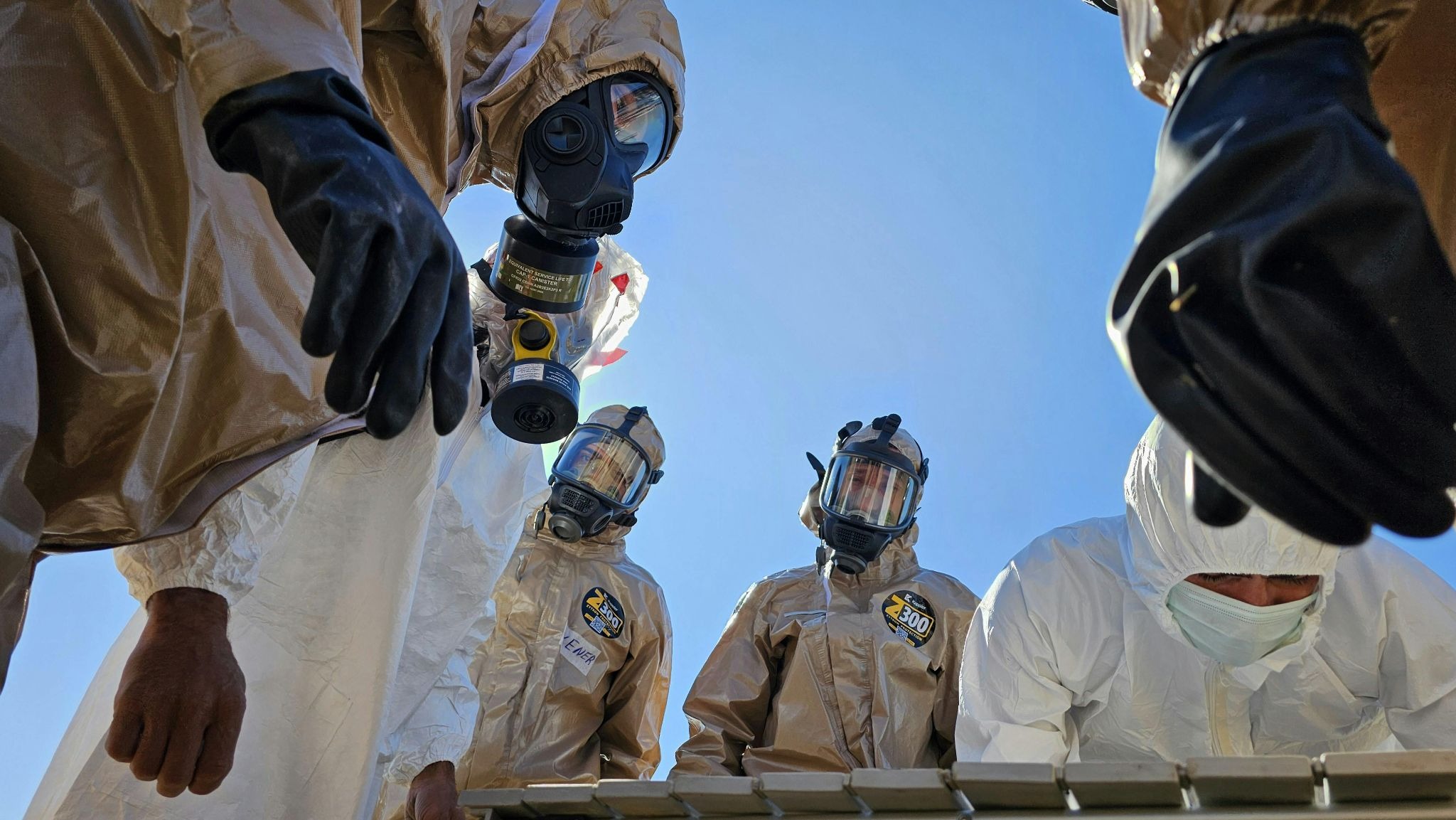
For the past two weeks, Ebola has dominated headlines across East and Central Africa. The outbreak was declared in the Democratic Republic of Congo (DRC), while neighboring Uganda reported a handful of cases.
A few days ago, I had a lengthy phone conversation with a former colleague in Uganda. One topic dominated our discussion: what I initially considered an overreaction to the reporting by some international media outlets covering the Bundibugyo Ebola virus outbreak. Several friends—mostly journalists, along with others with a large social media following—strongly criticized some of the coverage, describing it as outright malinformation.
At first, I disagreed.
Then I kept seeing headlines and social media posts that grouped Uganda and the DRC together in ways that suggested the two countries were experiencing similar outbreaks. After examining the data more closely, I had to admit that my friends had a point.
Nsonyiwa nnyo, samahani.
The numbers simply did not tell the story that many headlines were implying.
Below are two screenshots of headlines whose sources I have deliberately chosen to hide because that is not the point I want to make.

A social media post on the number of deaths in DRC and Uganda

A headline on the number of reported deaths in DRC and Uganda
I continued seeing similar headlines and social media posts. The more I looked at them, the more obvious the problem became.
The gap between the outbreaks in Uganda and the DRC was significant. The number of confirmed cases, deaths, recoveries, and people in quarantine was nowhere near comparable.
Yes, these are real lives. One would argue that even one life lost, or one person exposed to a deadly virus, matters. But making the situation appear more dramatic than it actually is does not help anyone. It can rather fuel unnecessary panic, encourage harmful reactions, and undermine public understanding during a global health emergency.
As the debate continued on how the media is reporting on the situation in Uganda, I became increasingly interested in understanding what was really being reported. I reviewed archived reports, official statements, and communications from public health authorities in the country and internationally.
The following graphs accurately illustrate the differences between Uganda and the DRC in terms of confirmed cases and confirmed deaths.


I understand the pressures we face as journalists. We need to simplify headlines. We work within editorial policies. We navigate social media character limits. We constantly search for ways to make stories accessible and engaging. But this is not a style-guide problem. My argument is much simpler.
When reporting on a disease as serious as Ebola—especially during an active outbreak—we should exercise greater care. We should resist the temptation to chase dramatic breaking-news alerts or quick scoops at the expense of context and precision.
We must double-check the numbers and present them without exaggerating or minimizing them. In public health emergencies, seemingly small inaccuracies can have consequences far beyond the newsroom.
Behind every statistic is a real person, a family, and a community.
I am not trying to trivialize misinformation and disinformation in other sectors. False information can be deadly regardless of the domain.
However, public health claims, especially Ebola-related, carry immediate implications.
A false claim, such as “Burundi has become the richest country in East Africa,” is less harmful than “Ebola’s medicine has just been discovered, so do not fear it anymore. It’s just another white men’s scam to intimidate us,” or “The World Health Organization has announced the end of Ebola in Congo”.
The difference matters.
Conspiracy theories and deliberate falsehoods have previously led communities to reject public health measures, attack treatment facilities, or distrust frontline health workers. Political misinformation can also trigger violence, fuel violent extremism, destroy property, and deepen social divisions.
The purpose of this argument is not to rank one form of disinformation above another. Harm should always be assessed on a case-by-case basis.
My point is that when lives are directly at stake, accuracy becomes even more critical. Raw data from international institutions can sometimes be broad, technical, or difficult for ordinary audiences to interpret. But our reporting should not know the same limitations.
Organizations such as the WHO and Africa CDC often publish reports intended for policymakers, researchers, and public health professionals. Their language may be technically accurate, yet not always accessible to the general public. That is where journalism comes in.
Regardless of reporting style, one of our most important responsibilities is translating technical information into language that ordinary people can understand. We are supposed to bridge the gap between experts and communities.
A hawker should be as informed about public health threats affecting their community as an engineer preparing a spacecraft for launch.
Perhaps I feel strongly about this because a significant part of my newsroom career has involved advocating for local-language speakers, remote communities, and audiences with limited formal education. Quality information should not be reserved for the educated, the connected, or the privileged. It should be available to everyone in a language they can understand.
Most people do not need to understand complex scientific formulas or advanced statistical models used to evaluate Ebola treatments and vaccine effectiveness. Those conversations remain important, but they belong primarily to specialists.
What ordinary citizens need to understand is how Ebola spreads, how to recognize early symptoms, where to seek treatment, what safe burial practices look like, how to identify rumors, and why health workers deserve public trust during an outbreak.
That knowledge saves lives.
I understand that many newsrooms may not always have immediate access to experts capable of explaining highly technical concepts. But oversimplifying those concepts is not the solution. Sometimes, the most responsible thing a journalist can do is acknowledge a knowledge gap and call an expert. There is no shame in that.
For concepts we already understand, however, there is even less justification for unnecessary oversimplification.
When the WHO or Africa CDC reports one death in Uganda and forty-two deaths in the DRC, it may be technically correct to write that the two countries have recorded more than forty Ebola-related deaths combined. But such framing obscures reality. It is not entirely inaccurate, yet neither is it entirely accurate. For the average reader, the distinction matters.
Uganda and the DRC have different epidemiological realities, different contexts, different preparedness levels, and different scales of outbreak. Readers deserve to know how many deaths occurred in Uganda, how many occurred in the DRC, how many confirmed cases each country has recorded, and whether the infections were linked to cross-border movement.
These are not subtle details. They are the story itself.
To my colleagues, please take this for what it is: a humble personal reflection from a fellow journalist.
Like many of you, I spend my work hours reviewing pitches, editing stories, and mentoring journalists, often in environments where access to experts, officials willing to comment, and experienced editors kind enough to give guidance is limited. Some reporters work under threats to their safety. Others have been forced into exile. Many operate in conditions that make quality journalism extraordinarily difficult.
Yet none of these realities absolves us of our responsibility to the public.
I am a defender of the idea that journalists are perpetual learners, who can makes mistake on the way, and I have come to believe deeply in high-quality journalism.
Good journalism can be slow. It can be expensive. Sometimes it can even be boring.
But when the story involves public health, public safety, or public trust, there is no substitute for getting it right.
These stories are too important to be shallow.
Some save lives.
Some hold power to account.
Others help communities navigate uncertainty and crisis.
That is why precision is not optional.
We should do better.
We can do better.
We will do better.
Cédrick Irakoze is a Senior Editor and Translator with over seven years of experience in multilingual journalism and content localization. He specializes in English < >French media translation, OSINT-based fact-checking, and information integrity. His work spans coverage across Burundi, Burkina Faso, Cameroon, the Republic of Congo, DRC, the Central African Republic, Côte d’Ivoire, Ethiopia, Guinea, Kenya, Mali, Niger, Rwanda, Tanzania, Uganda, Senegal, and South Africa.
I am trying to do this in my mother language,because my county is a high risk county. With Busia Kisumu road passing through It.