


As the Tanganyika water level keeps rising, an environmental expert warns of tragic outcomes
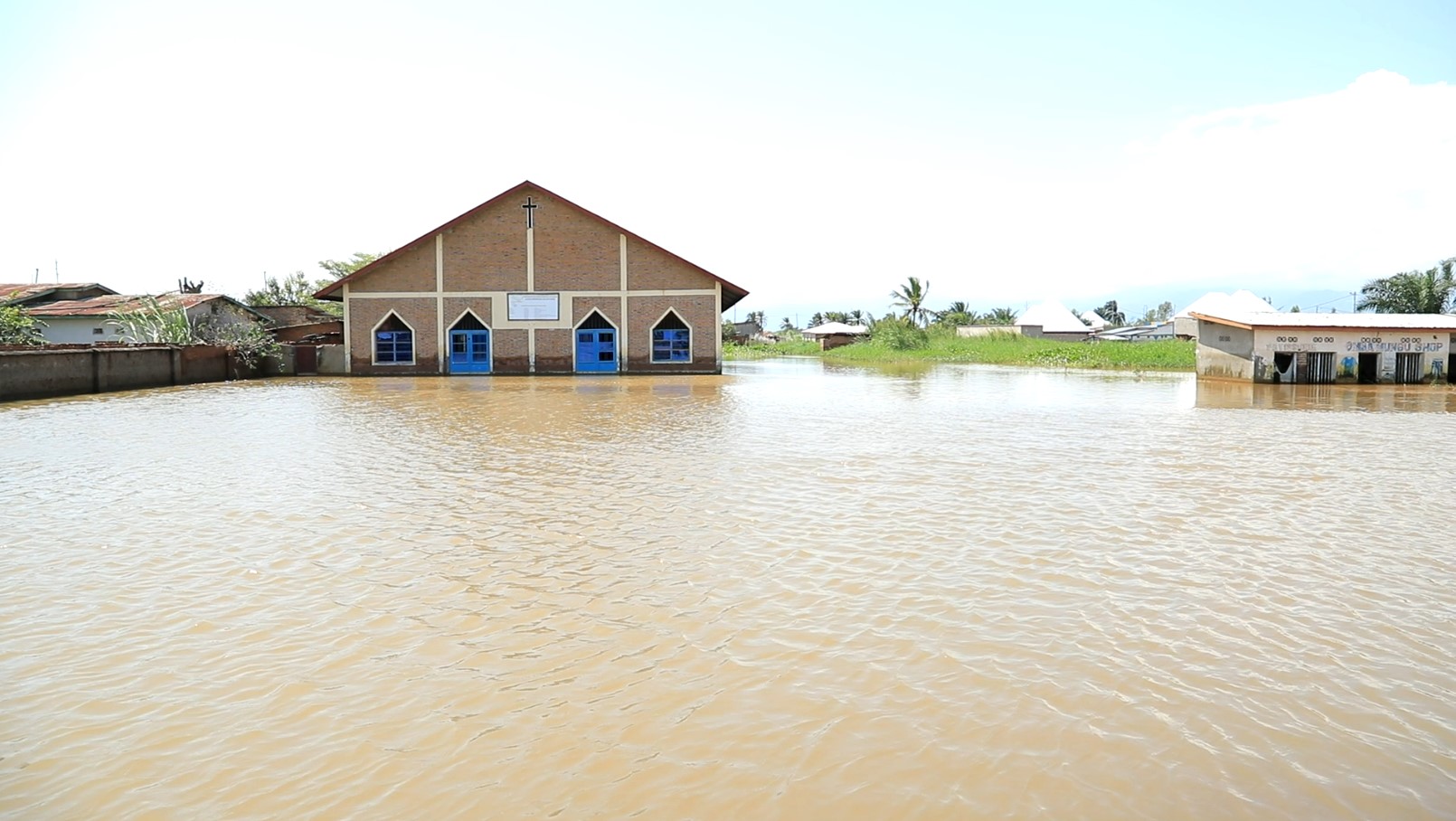
Since 2018, the rise of the Tanganyika water level has affected and destroyed humans, infrastructures, and crops. Elias Niyongabo, environmental science expert and professor at the University of Burundi, says that the El Niño phenomenon, large-scale erosion throughout the watershed, and reduced evaporation are the main causes. This environmentalist calls for urgent action from the Burundian government and neighbouring countries to safeguard the community.
Community Voice – What is causing the strange rise in Lake Tanganyika’s water levels?

Elias Niyongabo: “ Lake Tanganyika’s water levels depend on a delicate balance of inflows and outflows. The lake is fed by precipitation, rainfall, and numerous tributaries across its vast 250,000-square-kilometer watershed, which spans Burundi, the Democratic Republic of the Congo, Tanzania, Zambia, and Rwanda.
On the other end, most of the lake’s water—over 80%—is lost through evaporation. The only other exit is the Lukuga River, which carries a much smaller amount. Understanding this dynamic is essential to explaining changes in water levels and their environmental impact.
Community Voice – You mentioned a concerning temperature trend. What does that mean?
Elias Niyongabo: “The entire planet is witnessing an unusual increase in temperature. And with that comes warming oceans and melting glaciers at the poles. This process increases the amount of vapour in the atmosphere. As a result, the relative humidity of the Earth’s gaseous envelope rises. When that happens, evaporation is hindered. Earlier, I explained that evaporation is the main way the lake loses water. If it’s disrupted, this contributes to rising water levels — even in Lake Tanganyika.”
Community Voice – Tell us about the project that concerns you.
Elias Niyongabo: “I mentioned the Lukuga River, the only outlet from Lake Tanganyika. Back in 2016, a World Bank-funded project aimed to construct a dam on this river. The goal was to raise the lake’s water level to ease navigation for commercial vessels, which had been hindered by sediment from erosion. It was a grand project — purely economic. But it’s questionable. The root issue wasn’t addressed. If you artificially maintain high water levels while sediment continues to accumulate, eventually that sediment will reach the same level. In the end, the project could be entirely useless.”
Community Voice – Are the mountains overlooking Bujumbura City contributing to this?
Elias Niyongabo: “Those Mountains, which often collapse or crumble, aren’t to blame in themselves. They are naturally fragile, made of rock types prone to landslides. However, they’ve been made even more fragile by poorly planned and unsustainable exploitation. No one took the time to assess long-term durability. When you combine this natural fragility with intensified agriculture and a lack of planning, you get the problems we’re seeing today.”
Community Voice – Do you fear that Bujumbura City could be seriously affected by these unprotected, unwooded mountains?
Elias Niyongabo: “Unfortunately, that’s the direction we’re heading. Instead of reforesting these mountains, we are deforesting them at an alarming rate. The region’s population keeps growing. Bujumbura needs food, so agriculture pushes further into the mountains despite their vulnerability. I’m sorry to say that if nothing is done, we’re headed for a tragic end.”
Community Voice – What are the social and economic consequences of the climate disasters and the rising waters of Lake Tanganyika and the Rusizi River?
Elias Niyongabo: “Socially, large-scale displacement is inevitable. We will see climate refugees. All those living along the lake’s shore below 780 meters above sea level will eventually have to move, willingly or not. They’ll have to restart their lives. Economically, they’ll lose jobs and activities. Also, all ports on the lake — in Bujumbura, Tanzania, Zambia, and the DRC — will face challenges. Additionally, if erosion continues and more sediment flows into the lake, biodiversity will be severely affected. Key fish species such as Mukeke, Ndagala, and Capitaine, which are the pride of Tanganyika, cannot survive in muddy waters. They might hold on for a few decades, but not a century. Imagine Lake Tanganyika without Mukeke, Ndagala, or Capitaine — think of what that means for Burundi’s economy. We’re talking millions of dollars in annual losses!”
Community Voice – What solutions do you propose to reduce the impacts and prevent future disasters?
Elias Niyongabo: “First, we need comprehensive development of the entire Lake Tanganyika watershed. I’m talking about careful, strategic, well-thought-out planning. It’s a massive project, probably worth billions of dollars. It should involve all countries sharing the lake, including Rwanda. The goal is to stop erosion — the major threat to the lake, its biodiversity, usability, and shoreline communities.
Second, we must plan wisely and adopt laws grounded in reality. For example, our environmental code should not define construction limits by a fixed distance from the lake but rather by altitude. That’s a crucial distinction.
Third, a more controversial but lower-cost solution could be to dredge the Lukuga River so it discharges more water than it currently does. If we could adjust the river so that more water leaves the lake through it, rather than depending mainly on evaporation, we could stabilize the lake at a manageable and safe level.”

