No Water, No Peace: The Human Cost of Kibira’s Vanishing Water Sources

By: Arthur Bizimana
Deforestation in Kibira and drought are accelerating the drying up of water resources. The population in the park’s two watersheds is paying the price. Scientists fear the worst. This fourth story is part of a series of four investigations produced with the support of the Pulitzer Center.
In the capital of the former province of Bubanza, located west of the country, taps are drying up.
“We spend more than three days without Regideso supplying us with drinking water in almost all neighbourhoods,” laments Divin Nkunzimana, a resident of the capital of Bubanza.
In Kanabubu, a neighbourhood located in the northern part of the market, tap water appears at most once every ten days during the night between 1 a.m. and 7 a.m., says Evariste Irakoze, a resident of Kanabubu.
This is not the first time this has happened, says Irakoze. Every dry season, all neighbourhoods in this capital experience the worst disruption in the supply of drinking water in more than five years, he adds.
About thirty kilometres away, in Kagwema, an area located in the Rusizi plain, the situation is the same. “Tap water is scarce. When the water comes, it is insufficient and only lasts for an hour. It comes at 8 a.m. and disappears at 9 a.m.
“Only those who get up at dawn at 3 a.m. can fetch water,” says Aline Niyogusenga, a resident of the Kagwema community.

Bubanza is one of the provinces bordering the Kibira Forest and is supplied with drinking water from springs developed in Kibira by Regideso. This public company is responsible for the production and distribution of drinking water and electricity.
“They supply drinking water to more than two million people,” estimates environmentalist Nzigiyimpa. On the other hand, Professor Habonayo points out that the Kibira Forest provides drinking water to around three-quarters of the surrounding population.
Indeed, many major rivers and streams originate in this forest massif, irrigating agricultural fields as they flow downstream. ‘To the west of the ridge, in the Congo Basin, they irrigate the Imbo plain, which accounts for more than 50% of the rice consumed in the country, while to the east of the same ridge, in the Nile Basin, they water the cross-border Bugesera depression,’ says ecologist Nzigiyimpa.
Thus, Kibira is considered the water tower for the Congo and Nile river basins.
Unfortunately, the water sources developed by Regideso diminish during the dry season and return to their normal levels during the rainy season, explains Dr Abel Nsabimana, a lecturer and researcher at the University of Burundi, trained geographer and expert in hydrogeology.
When the water sources have replenished during the rainy season, tap water flows freely, whereas during the dry season, when the flow from the water source decreases, the taps are often dry.
A lot of runoff, little infiltration and groundwater recharge
The gradual destruction of Kibira Forest is one of the reasons for this. Across the country, deforestation has reached its peak with an annual rate of 9%, alerts the third national communication on climate change. This compromises sustainable development, explains Professor André Nduwimana.
“Massive deforestation, the establishment of crops in prohibited areas such as Kibira and other environmental crimes have destroyed the ecosystem, such as water-fixing grasses, in this case, papyrus.
Papyrus is the breadbasket of water sources. It is understandable that if we clear it, within a few years, the water will decrease or even dry up,” says Berchmans Hatungimana, Director General of OBPE.
Professor André Nduwimana explains: “deforestation significantly reduces the soil’s ability to absorb water. This means that the water table is not replenished.”
On the other hand, it increases the surface level of runoff. “All rainwater flows into rivers during the rainy season. This causes lake levels to rise and river flow to increase. Conversely, during droughts, the water that evaporates from lakes and rivers and through transpiration from the tea plantations is not compensated for by the water table,” explains the researcher.

Burundi is currently experiencing prolonged drought and a short and irregular rainy season. Whereas the dry season used to last from June to September, it now begins very early, at the beginning of May, and ends towards the end of October, according to the Third National Communication on Climate Change.
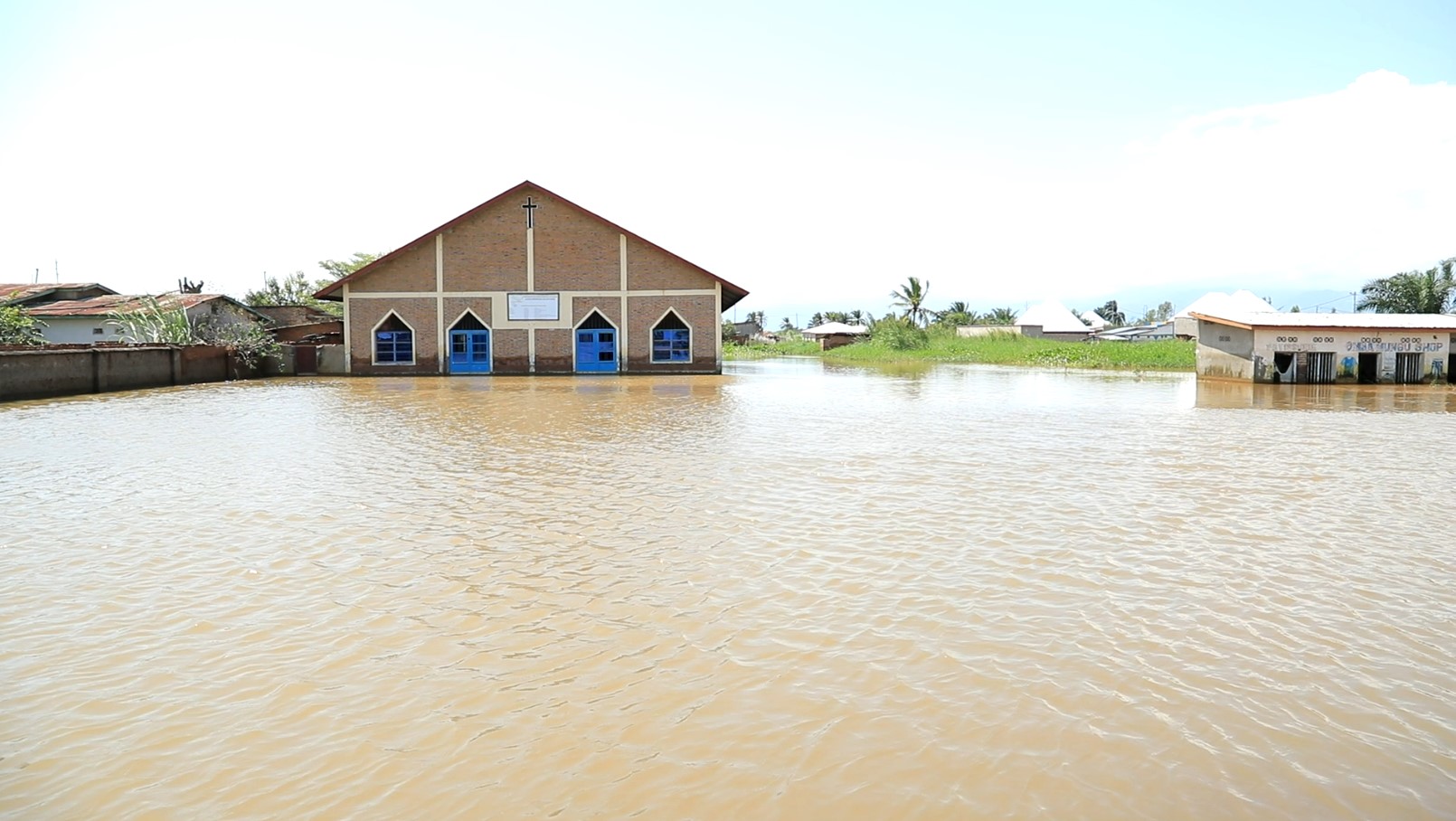
Drought and human activities exacerbate the drying up of springs and watercourses. As a result, lake levels and the flow of water sources and rivers are declining. Consequently, they are drying up over the years, adds Professor Nduwimana.
The Directorate General for Environment and Sanitation supports the researcher’s analysis with data. Of the 24,787 water sources available in Burundi in 2021, 2,508 have already dried up, representing 10% of available water sources; 1,418 are in the process of disappearing, representing 6%. Only 17,821 water sources are in good condition, or 72%, according to Jérémie Nkinahatemba, former Director General of Environment and Sanitation. However, the Kibira accounts for more than 50% of Burundi’s water sources, says Dr. Laurent Ntahuga.
In a recent article, lecturer and researcher André Nduwimana showed how Lake Rwegura, fed by water sources originating in Kibira Park, continues to decline in level as a result of deforestation and acute drought.
Professor Habonayo warns that the worst is yet to come. “These water sources exist because the forest is still there. If nothing is done to protect Kibira, all these water sources will dry up. We won’t see it in our lifetime, but in the long term, it could happen.”
The emergence of conflicts within families
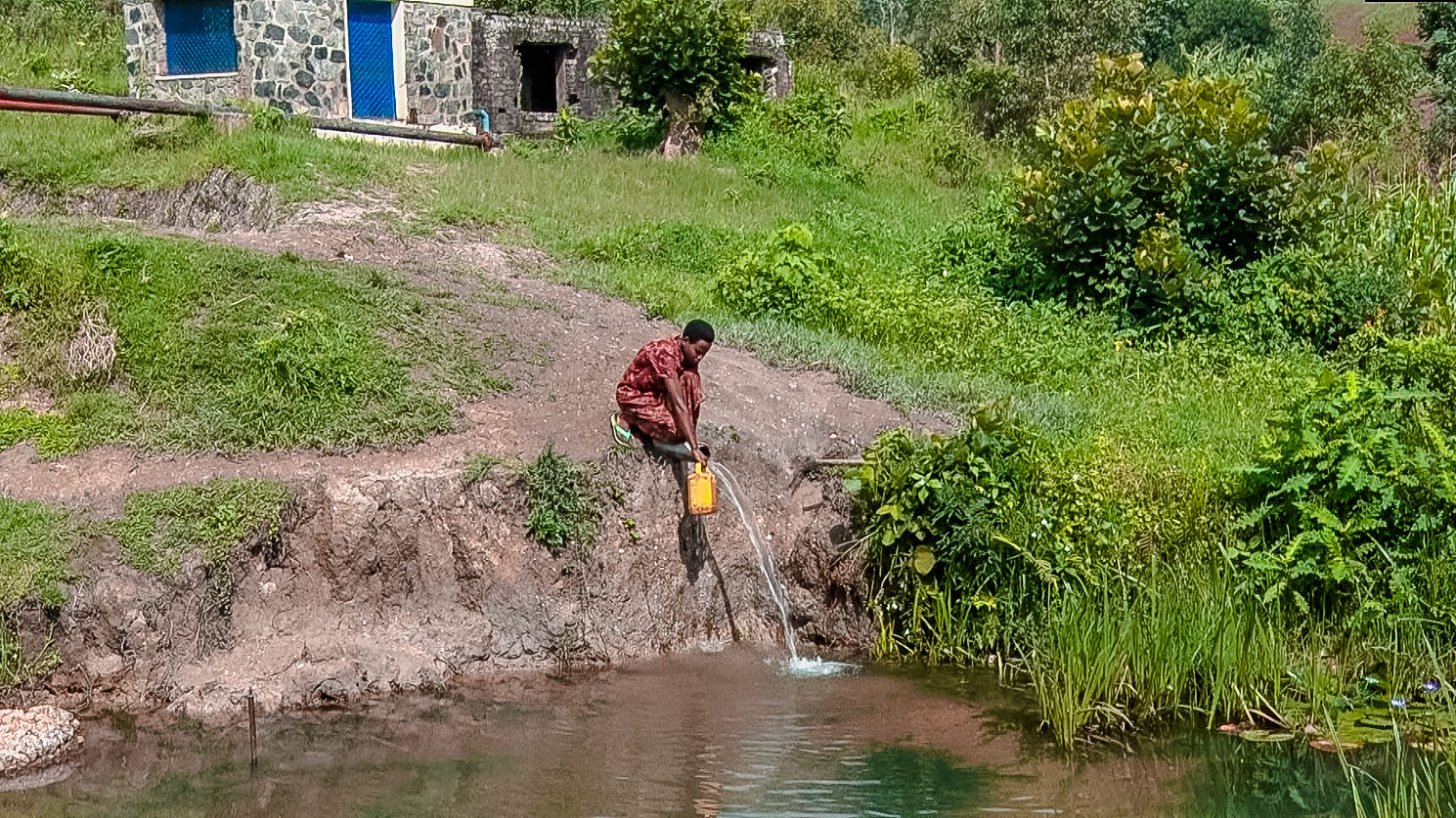
To obtain drinking water, the inhabitants of the main town of Bubanza turn to springs developed in the marshes, commonly known as “Rusengo”. Unfortunately, these are quite far away. “We climb the mountains and arrive home exhausted,” says Divin Nkunzimana.
In Kagwema, the reality is quite different. Even the Rusengo rivers dry up around May when the dry season begins, and reappear during the rainy season around October, says Etienne Bigirimana, head of the Kagwema sector. The population relies on the water that irrigates the agricultural fields.
Sometimes, the people of Kagwema are forced to travel long distances. “We fetch water from remote villages such as Gihungwe, Mpuzamuhari or Fourth Avenue in Ndava. On foot, it’s a three-hour journey,” reveals François Ndondo.
This causes conflict within families. Men beat their wives and hurl insults at them, accusing them of having been out late.
The head of the Kagwema sector says that at the local government level, they receive many cases/complaints where spouses argue over water.
“We have reached a stage where we draw water from the Rusizi River. Our people have lost their lives there, devoured by crocodiles and hippopotamuses,” recalls Samuel bitterly.
Thanks to the solar-powered groundwater drilling project, with tanks and a connected tap, the Amazi Water project supplies groundwater to the inhabitants of Kagwema, which they call “amajorojika” in Kirundi, from the word ‘geological’. However, the sole valve supplying the entire Kagwema area with drinking water is proving insufficient, according to the head of the Kagwema sector.
“I arrived at 9 a.m. But, as of 2 p.m., I still haven’t been served. That’s because there are so many of us here. We have to take turns drawing water, two containers per person, to give a chance to those who have come from far away a chance to draw water,” says Aline Niyogusenga, before adding that she believes the water is undrinkable and salty, and could cause flu or coughs.

“Sometimes, this leads to disputes, and people fight over who should draw first. Children suffer injustice at the hands of adults because they do not have the strength to defend themselves,” notes Etienne Bigirimana.
This mess is forcing the local population to drink water from the Rusizi River, continues the head of the Kagwema sector.
Proliferation of waterborne diseases
“By drinking water from the Rusizi River, we catch waterborne diseases such as cholera and dysentery. Not a year goes by without cholera affecting people here in Kagwema,” recalls Samuel. It is the most common disease here, adds sector chief Bigirimana.
As in Kagwema, waterborne diseases are also prevalent in Bugera in the former province of Kirundo, located east of the Kibira River, which also supplies it with water. “We often get sick with cholera from drinking dirty water,” says Vanessa Nikuze.
“If you pay a visit to Bugera hill, you will find men with big bellies like pregnant women as a result of drinking dirty water,” says Célestin Karimanzira, 52, chief of Bugera hill.
Due to its environmental situation, Burundi is also naturally exposed to vectors of water-related diseases such as malaria. Deforestation thus encourages its spread into areas where it did not previously exist.
Deforestation also promotes the spread and growth of malaria. Since Kibira has been stripped bare, mosquitoes have been swarming, says Séverin Bagayuwitunze, 61. “When I was young, no one in Rwegura suffered from malaria. There were no mosquitoes. We experienced aches and pains and suffered from flu due to the climate. Now that the Kibira has been devoured, we are exposed to all kinds of diseases. The hospital treats many cases of malaria,” observes Bagayuwitunze.