


Stories That Heal: Journalists equipped to tell mental health-related stories in Burundi
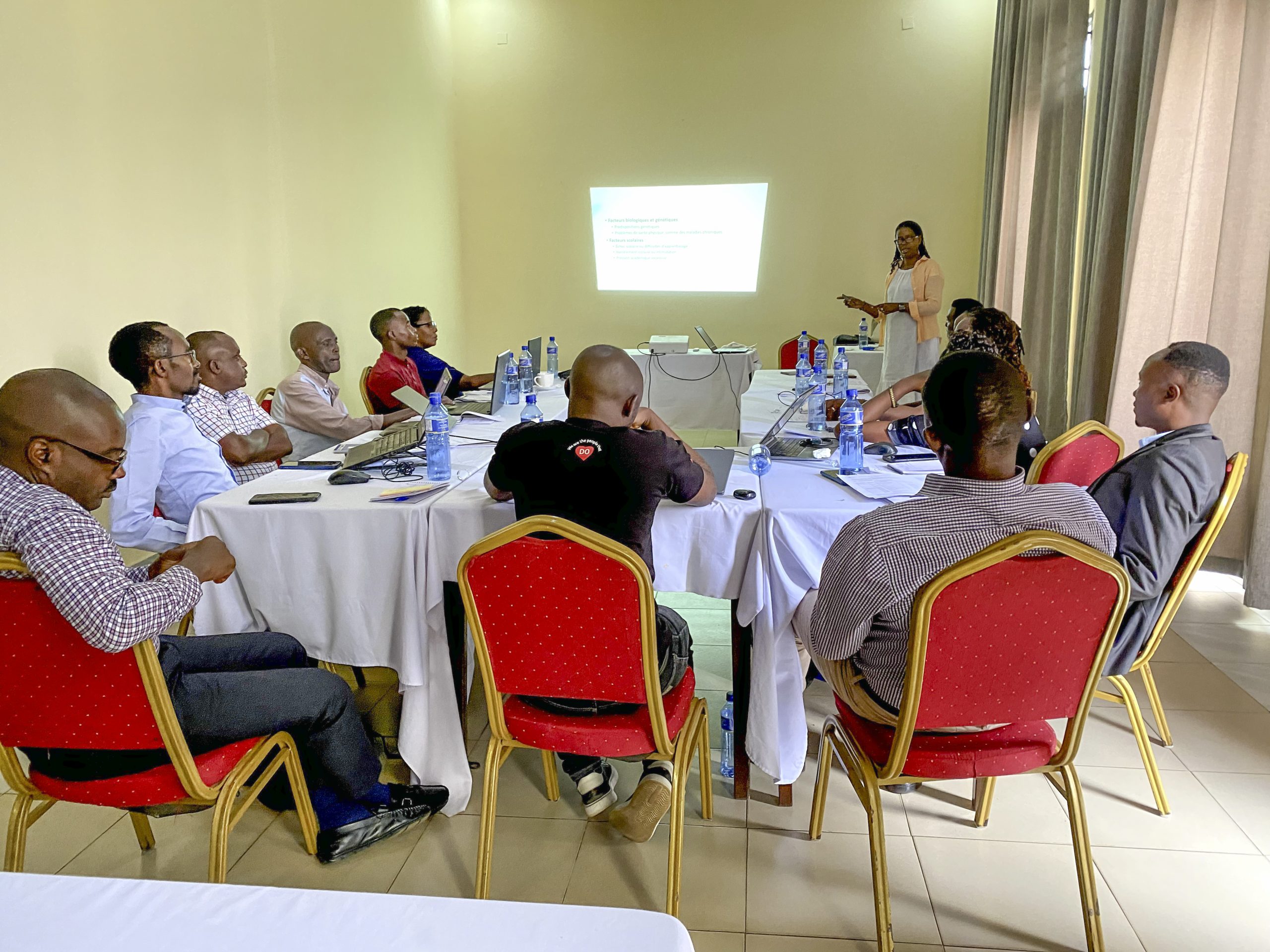
Ten journalists were trained on how to better report on child and adolescent mental health disorders in Burundi. They learned about human‑centered and data‑driven approaches. The training aims to produce stories that raise awareness and shift the paradigm on mental health disorders affecting children and adolescents in Burundi.
This project, “Enhancing Mental Health Narratives in Burundi,” is supported by the Stavros Niarchos Foundation (SNF) Global Center for Child and Adolescent Mental Health at the Child Mind Institute.
Ten journalists from radio, television, print, and digital media across Burundi participated in a two-day training held in Gitega, Burundi’s political city, on September 26–27, 2025.

The training aims to enhance mental health narratives in Burundi through human-centered and data-driven approaches, especially on mental health disorders affecting children and adolescents, one of the country’s most vulnerable groups.
Burundi, like other low-income and post-conflict countries, faces widespread mental health distress, with limited psychological services and entrenched stigma.
Thus, a voice from the media is crucial in informing and educating the public by raising awareness and helping curb stigma.
However, to achieve the above goal, journalists need to be trained to accurately and completely inform the public. That’s why journalists were trained.
Nimubona Reveals Youth Mental Challenges
“Half of all psychological disorders begin before the age of 14.“They shape futures long before adulthood arrives,” said Dr. Godelive Nimubona, the trainer of the day and one of Burundi’s four psychiatrists, who currently works at the Kamenge Neuropsychiatric Center (CNPK), the country’s only specialized mental health hospital.

Dr. Nimubona added that from infancy to adolescence, each stage presents its own set of risks. “When development falters, problems emerge, such as anxiety, depression, conduct disorders, eating disorders, autism, and ADHD. Poverty, family conflict, neglect, and social pressures deepen the vulnerabilities.’’She noted.
The psychiatrist emphasized that consequences are far-reaching. School performance drops. Friendships break. Families struggle, and Physical health declines. Left untreated, these conditions often persist into adulthood, limiting employability and social integration.
“Mental health is not just about the mind,” Dr. Nimubona stressed. “It is about the whole life trajectory.”
Yet solutions exist. Cognitive-behavioral therapy, family counseling, play therapy, and school-based programs can help restore balance and stability. Communities, she added, must play their part in breaking stigma and offering support.
Her lesson was clear: Burundi must invest in awareness, resources, and multidisciplinary care. “Healing young minds,” she said, concluding that it means safeguarding the nation’s future.
Reporting Mental Health with accuracy and Empathy
Aside from her, Nolis Nduwimana, Editor-in-Chief at Radio Indundi Culture, outlined the key stages of producing thorough and impactful journalism.
Drawing on Samuel Cartwright’s theory of diagnosis, prognosis, and therapy, he urged reporters to apply the same rigor to their work. “Every production must follow precise and planned sequences—synopsis is mandatory,” Nduwimana emphasized.
He emphasized the importance of subject selection, editorial approach, interviewees, and technical preparation, particularly when covering mental health among children and adolescents. “Only then can we practice journalism of solutions for those who have endured psychological struggles,” he said.
He added that effective editorial planning requires collaboration across the production chain, stressing that journalism is a collective effort aimed at delivering meaningful change.
Journalist and trainer Jean de Dieu NDIKUMASABO called on reporters to adopt a human-centered storytelling approach, especially when covering the mental health of children and adolescents. “A human-centered story begins with the experience of a real person, not with numbers,” he told participants. “Behind every statistic is a life, and good reporting must reveal those lives.”
He introduced the narrative arc of tension as a tool to structure stories. He illustrated it with the case of a Bujumbura family facing divorce, where children struggled with depression and anxiety until psychological support was sought.
“A human-centered narrative gives voice to those society does not always hear,” he concluded. “It is how we raise awareness on complex topics and touch people at the same time.”

From Data to Story: Ethical Mental Health Reporting
Another chapter in this series of training was focused on data journalism. Investigative and data-driven journalist Avit Ndayiziga, Editor-in-Chief at Community Voice Burundi, urged trainees to rely on data to expose service gaps and strengthen accountability in mental health reporting.

“Using data in mental health reporting can reveal how anxiety and depression affect school attendance and adolescent well-being. He noted.
The trainer emphasized the importance of ethical reporting, which implies protecting privacy, amplifying lived experiences, and ensuring young voices are heard.
He also shared open-source resources and tools, including Excel, Google Sheets, Flourish, and Datawrapper for data sorting and filtering, as well as visualizations.
The last session on Story Pitching techniques was led by Gaspard Maheburwa, aimed to strengthen journalists’ ability to craft professional and impactful narratives.
It equipped participants with the fundamentals of building a strong story and harmonizing their understanding of how to approach sensitive topics, particularly those related to mental health.
Journalists Gain Confidence in Human-Centered Coverage
By the end of the session, journalists acknowledged gaining new strategies to pitch stories more effectively, ensuring their reporting is both professional and responsive to the realities of mental health in Burundi.
After two days of intensive training, participants expressed deep satisfaction with the training, emphasizing that it provided them with knowledge they had never received before in their journalism careers. Many said the sessions helped them better understand mental health disorders affecting children and adolescents, a topic often overlooked in Burundian media.
They also appreciated the practical guidance on interviewing vulnerable sources and producing human-centered stories. Several journalists noted that the training strengthened their confidence to report on mental health with accuracy, empathy, and responsibility.
Overall, participants described the workshop as a transformative experience that will significantly improve the quality of mental health reporting in Burundi.
As Burundi works to integrate mental health services into primary healthcare by 2030, the media must play an essential role in informing and educating the public.
By producing human-centered and data-driven stories, journalists aim to help fight stigma, raise public awareness, amplify the voices of affected children and families, support communities in seeking care, and influence policymakers.
The Gitega training marked a significant step toward equipping Burundian journalists with the skills needed to tell mental health-related stories responsibly and powerfully.
Trained journalists committed to producing child and adolescent-related stories.
This project, “Enhancing Mental Health Narratives in Burundi,” is supported by the Stavros Niarchos Foundation (SNF) Global Center for Child and Adolescent Mental Health at the Child Mind Institute.

