
The lack of Digital ID Systems threatens the Digital Economy of Burundi

From Digital ID systems, Data protection and cybersecurity laws, AI strategies, and universal connectivity, Burundi has embarked on a bold digital journey to redefine governance, business, and daily life. However, insufficient and outdated digital public infrastructure, goods, and related challenges still impede progress, despite initiatives to overcome them.
This series takes you inside the country’s push toward ambitious digital transformation. Current initiatives, challenges, and expected outcomes.
This series has been produced under the Digital Public Infrastructure (DPI) Journalism Fellowship for Eastern Africa and Media Partnership with CIPESA.
Part 6
This part highlights how the lack of a verifiable national digital ID system for decades has handicapped a digital transformation in Burundi.
A stalemate in Burundi’s digital ID system
While the interior minister argued before the lawmakers that the lack of a legal framework has hindered the implementation of a verifiable national digital ID system for decades, politicians argue that a lack of political will has been the main hindrance. Tech experts warn that its absence could stall the country’s push for full digitalization.

Since March 1978, Burundi has not upgraded its paper-based national Identity Card. Only Burundi and South Sudan lack verifiable national digital ID systems among the other EAC partner states. Tech experts warn that this lack has caused many challenges, including financial fraud, judicial corruption, electoral fraud, forged documents, tax evasion, and other forms of fraud.
Police Brigadier General Joseph Kenyatta, General Commissioner of the Judicial Police (PJ), says that the lack of a verifiable National ID System has amplified online financial scams. For him, “it only takes a simple message that falsifies your identity as a celebrity or a well-known figure in power, promising jobs and other significant opportunities. Victims often unwittingly send money, believing they are transferring funds to authorities or other friends when, in reality, they are not.” Kenyatta emphasizes the lack of verifiable ID and the victims’ curiosity as the main issues.
Beyond financial fraud, the absence of a digital ID has fueled bigamy or duplicate marriages in Burundi. Legally married people leave their areas and go to marry in farther areas, as the government is unable to verify their marital status. The incident occurred on July 19, 2025, in Kanyosha Zone, the southern part of Bujumbura, Burundi’s economic city. A wedding ended in handcuffs.
A wedding ended behind bars
In a white gown and high-heeled shoes, with a flower in her hand and an endless, bright smile on her reddish lips, the bride radiated ethereal beauty. Witnesses told us.
She strutted hand in hand with her groom in a black suit, as usual, at the civil registry office. Photographers clicked and flashed every emotion. The most awaited and unforgettable day to exchange their wedding vows, which only death has the power to terminate, had come.
Unfortunately, neither the bride nor the groom knew that death was around, probably among the guests. When the moment arrived to exchange their wedding vows and sign their marriage certificate. In the meantime, another woman stood up, claiming that she had been legally married to the groom. And they have four children together.
The situation escalated, and the celebration ended with the groom being handcuffed and taken into custody as he had submitted forged documents certifying that he had never been married.
The above scenario sparked debate over the reasons for the absence of a biometric National Identification system for over a decade, despite the government announcing its implementation in 2010; it remains unavailable.
Aside from bigamy, the 2025 general elections in Burundi, in which the ruling party claimed a sweeping victory of more than 98 percent, have sparked sharp criticism from opposition leaders. They alleged widespread fraud, arguing that the lack of a verifiable national digital ID system undermined the credibility of the vote.
Opposition figures point to repeated promises by the former home affairs Minister that a digital ID was to be introduced ahead of the polls. They contend that such a system could have prevented irregularities, including instances where individuals allegedly voted multiple times or cast ballots on behalf of others. For them, a digital ID is not only a safeguard against fraud but also a tool to enhance transparency, strengthen public trust, and reduce the overall cost of organizing elections.
Responding to these allegations, François Bizimana, spokesperson for the Independent National Electoral Commission (CENI), acknowledged the complaints and highlighted the benefits of digital identification. He hopes that the system’s availability will help to prepare for the next election cycle.

“For now, we only have the number of those who voted,” Bizimana said. “If the electoral register were fully digitalized, it would allow us to easily identify deceased voters and those reaching voting age before the next election,” He noted.
Why is a digital ID still lacking?
The lack of digital identity remains one of the most asked questions in Burundi today. In December 2023, the Ministry of Home Affairs launched a program to issue digital ID cards for use in the 2025 elections.
Yet, three years later, the cards were never implemented. No official explanation has been released to clarify what hindered the process, leaving politicians, citizens, and civil society in the dark about why such a critical reform failed to materialize.
On the other hand, this situation leaves people in misinformation and infotoxication, while clarification should be delivered by official figures
During the launch ceremonies, former Minister of Home Affairs Martin Niteretse acknowledged that the absence of a digital identity system had fueled criminal activity. He pledged swift implementation, noting that “ill‑intentioned individuals, exploiting this gap, manage to obtain multiple identity cards to escape judicial prosecution, manipulate civil registry services, or conceal their marital status.”He noted.
In December 2025, President Evariste Ndayishimiye acknowledged that Burundi’s digital ID project had been derailed by wrongdoers exploiting fraud and other crimes. He announced that the system is currently being tested in Zone Matara, Gitega province. He emphasized that once the pilot phase proves successful, the digital ID will be rolled out nationwide.
Despite repeated promises, Burundi’s digital ID project, first announced nearly 15 years ago, has yet to be implemented.
Gabriel Rufyiri, president of the anti‑corruption watchdog OLUCOME, argues that the failure reflects entrenched graft. “The absence of digital IDs after more than a decade since the program was launched summarizes the power of corruption that has ravaged Burundi for years,” he said.

Rufyiri went further, suggesting political motives: “Beyond corruption lies the fear of the ruling party, which risks losing elections if everything is verified.”
He issued a stark warning: “If nothing changes, embezzlement will persist and Burundi’s vision will end up in smoke.”
Different figures, including lambda citizens, share this point and hope that things will change in favor of transparency and truth.
When to expect the digital ID?
Salvator Nshimirimana, Digitalisation Director at the Ministry of Finance and Digital Economy of Burundi, admits that “a national digital ID is the cornerstone of digitalisation. It allows individuals to have a unique identifier, thereby promoting transparency across all digital services.”

Despite being a cornerstone of digitalization, its acquisition requires significant efforts on both the legal and technical fronts, and, above all, a strong political will, which Nshimirimana says is already available from the head of state to achieve the country’s vision.
He therefore cites the various steps required, as outlined in the document: identification of the diagnostic from the identification system, a detailed evaluation of the pilot system for civil registration digitalization, and the development of requirements for an integrated identification system in Burundi.
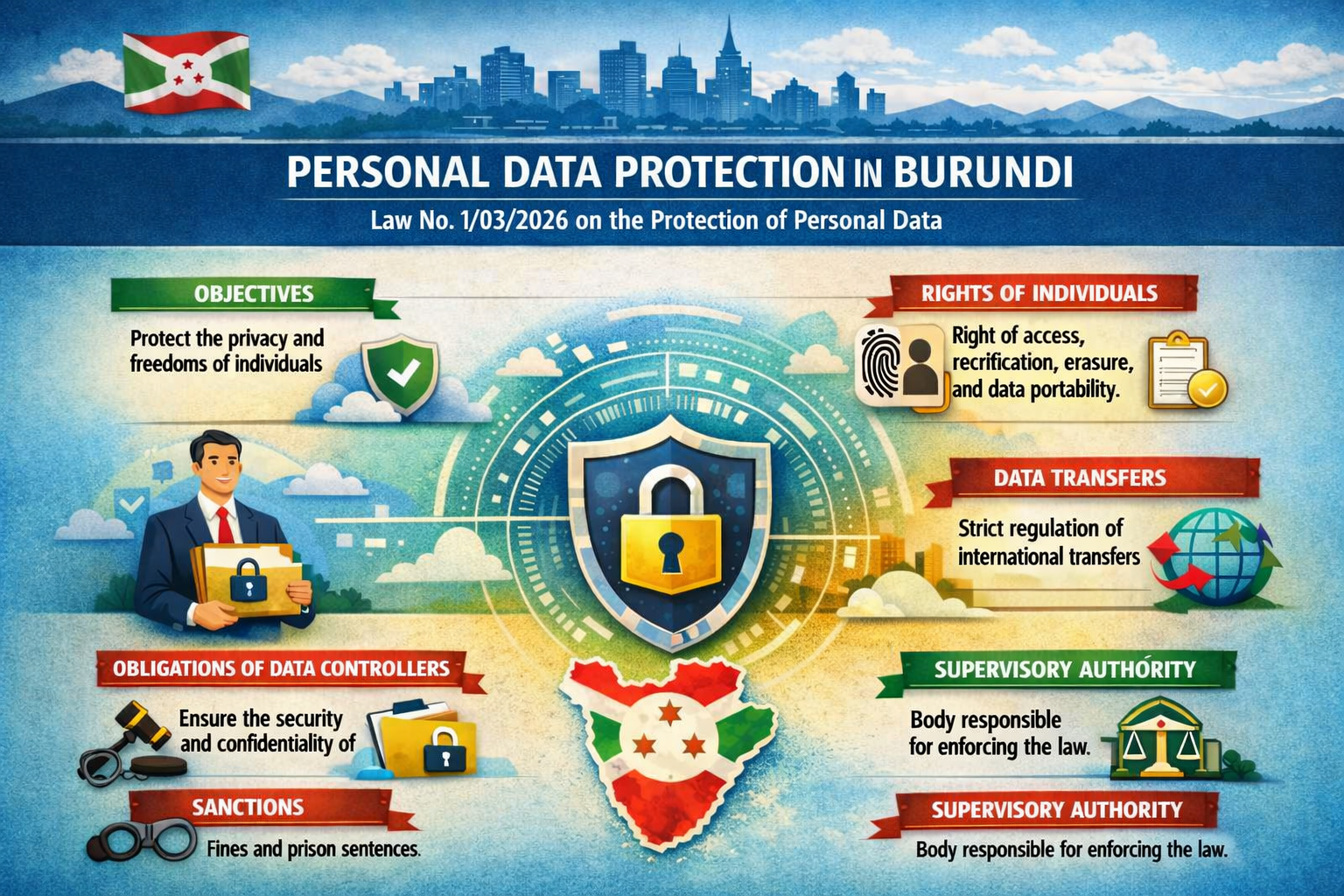
A national biometric identification system begins by establishing a robust legal framework that ensures data protection, institutional transparency, and public accountability. At this point, the director states that the data protection law has been adopted, marking a significant step forward.
Beyond the legal framework, Nshimiramana adds that it moves on to technical design, which includes creating a secure central database and adopting reliable biometric standards. This step is followed by Infrastructure development, including investments in enrollment kits and high-capacity servers.
The digitalization director adds that Data security remains a central concern and must therefore be addressed through strict protocols and regular audits. He therefore says that the government, through the PAFEN project, plans to build a national data center that fulfills all the international standards.
This digitalization director highlights that many challenges have hampered the sector for decades, including the lack of clear plans and the sector’s dislocation across various ministries, leading to discontinuity in digitalization activities.
Nshimirana hopes that “if everything moves forward as planned, in three to five years, Burundians are likely to possess National Digital IDs. Otherwise, it would be a great failure for us,” he concluded.